2.png)
Hi everyone, I’m Tom from Melbourne, Australia. Three years ago, I was just a hobbyist tinkering with homebrewing in my garage. Back then, brewing an IPA that I was genuinely happy with could make my entire day.
As craft beer grew increasingly popular back home, a thought crossed my mind: why not turn my passion into a business?
So I leased a space in the Melbourne suburbs and set out to open my own craft brewpub. Taking that step from homebrewing to commercial brewing, I quickly realized that choosing the right equipment was far more complex than I had ever imagined.
Today, I want to share, as someone who’s been through it, the details that are easy to overlook when selecting equipment—yet are absolutely critical. These details nearly led me down the wrong path, but they also ultimately helped me find a partner I could truly trust.
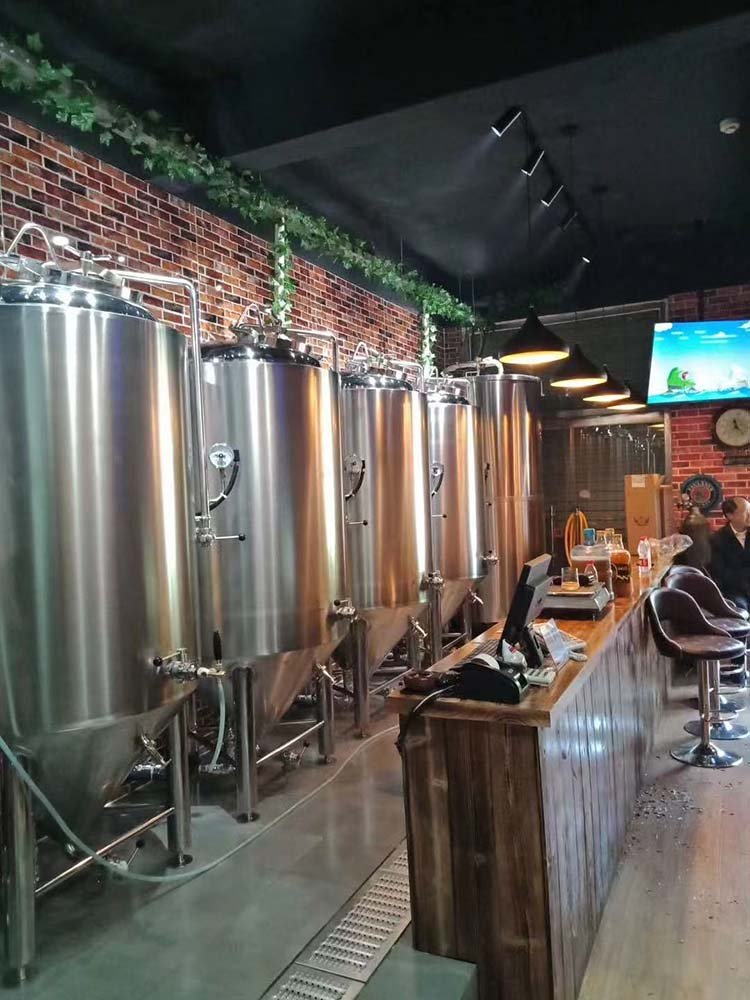
Lesson One: The Brewhouse – Don’t Just Focus on “How Many Vessels”
When I first started researching equipment, I was overwhelmed by terms like “two-vessel” and “three-vessel” systems. What’s a mash tun? What’s a whirlpool? And what’s the point of a hot water tank?
Then I connected with my current equipment supplier—Zorime, a company based in the birthplace of China’s craft brewing equipment industry. They gave me an education.
They asked me, “Tom, how many batches do you want to brew in a day?”
I said, “Ideally, two batches a day.”
They immediately suggested, “If your budget allows, go for a three-vessel system, and design the hot water tank to double as a kettle. That way, you can use it as a hot liquor tank in the morning to start mashing quickly, clean it out in the afternoon, and use it as a kettle for another batch. You can easily brew two or even three batches a day.”
That design later became the key to doubling my brewpub’s capacity. During peak season, I’ve brewed three batches in a single day, and the equipment kept up without issue.
There was another small detail they proactively reminded me to add: a hop dosing and filtration vessel.
At the time, I didn’t understand. “Adding another tank—isn’t that just more money?”
They explained, “This tank prevents hop matter from clogging your heat exchanger and allows you to add hops on the hot side, which improves aroma release. This is popular in Europe and America now—your customers will thank you.”
Sure enough, after I started using it, my IPA’s aroma became much more vibrant. My regulars said, “Tom, your beer has more complexity than many big brands.”
Lesson Two: Lauter Tun – Flat Bottom or Conical Bottom?
This is the pitfall I’m most grateful to have avoided.
Many equipment manufacturers in China, for ease of fabrication and lower costs, make lauter tuns with conical bottoms. But my supplier told me, “Conical bottoms are simpler to make, but your wort yield will be lower. If you want high efficiency and better yield, you need a flat bottom.”
Not only did they use a flat bottom, but they also equipped it with easily removable false bottoms. After every brew day, I pull out the false bottom, rinse it off, and let it air dry. It’s spotless and works perfectly every time.
They also proactively added a sparge spray ring.
They said, “Many manufacturers don’t include this, leaving you to sparge manually. But imagine standing next to hot equipment with a hose, spraying by hand—how dangerous and inconvenient is that? We add the spray ring so you just turn on the pump, and hot water sprays evenly and safely.”
These small details were the first time I truly felt they weren’t just “selling equipment”—they were “helping me brew better beer.”
Lesson Three: Heating Methods – Steam, Electric, or Gas?
“The heating method for your kettle is critical,” they emphasized repeatedly. “Steam heating is the best option. It heats evenly, keeps wort color light, and minimizes scorching.”
Considering my space constraints, they ultimately designed a hybrid solution combining electric and steam heating—meeting my site limitations while ensuring effective heating.
They also warned me, “If you plan to use direct gas firing, make absolutely sure your gas pressure and flow rate are sufficient. Many bars here use residential gas lines with low pressure that can’t properly power commercial burners.”
Their attention to these details convinced me they genuinely knew their craft.
Lesson Four: Fermenters – Plate Thickness Is the Bottom Line
Fermenters are the heart of brewing. They gave me a non-negotiable standard: “For vessels 500 liters and above, inner wall thickness must be at least 3mm, with an effective thickness after polishing of at least 2.7mm. The cooling jacket should be 1.5mm, and the outer cladding 1.5 to 2mm. Below this standard, both lifespan and safety are compromised.”
They proactively showed me material certifications: “Every batch of our 304 stainless steel comes with mill certificates. You can verify thickness and material anytime.”
I asked them, “Why are you so insistent on this?”
They replied, “Fermenters endure pressure, temperature fluctuations, and acid-alkaline corrosion during use. Metal fatigue shortens equipment life. We don’t want you reinvesting in new tanks just a few years down the road.”
In that moment, I understood what “reliable and trustworthy” truly means.
Lesson Five: Chillers – One Is Never Enough, Two Give You Peace of Mind
“The chiller does more heavy lifting than the boiler.” I still remember that line.
They explained, “All craft beer relies on low temperatures, especially lagers. If your chiller fails and temperatures rise, beer quality deteriorates immediately. We recommend buying two chillers—one primary, one backup.”
At first, I thought they were being excessive. Then one day, my main chiller had a minor issue. The backup kicked in automatically, and temperatures didn’t budge. That’s when I realized that “extra” expense was really buying me the right to sleep soundly.
Final Thoughts: Choosing Equipment Means Choosing Partners
My equipment comes from Jinan, China—the birthplace of the country’s craft brewing equipment industry. There, you’ll find the most mature supply chains, the people who understand beer best, and the most advanced technology. More importantly, you’ll find a community of down-to-earth, genuine people.
They never pushed me to buy unnecessary extras. Instead, they helped me save money, plan efficiently, and brew better beer. Every time I’ve encountered an issue—day or night—a quick message has brought an immediate response. Worry-free after-sales support isn’t just a slogan; it’s a daily reality.
Value for money isn’t about cutting corners. It’s about leveraging a mature supply chain and efficient management to pass real savings on to the customer.
If you’re also making the leap from homebrewing to commercial production, my advice is this:
Don’t just focus on price, and don’t just count “how many vessels.” Ask about the details—how thick is the steel? How are welds done? Can the false bottom be removed? How do you sparge? Is there a backup chiller?
These details determine whether you’ll spend your days fixing equipment—or focused on brewing great beer.
Your dream deserves nothing less.
-300x83.png)