2.png)
A bright beer tank is a vessel used for storing finished beer. In the beer brewing process, after the fermented liquid is filtered to remove yeast and turbidity, it becomes clear and transparent. At this stage, it is called “bright beer,” which is temporarily stored in bright beer tanks before being supplied to the packaging department for bottling as the final product.
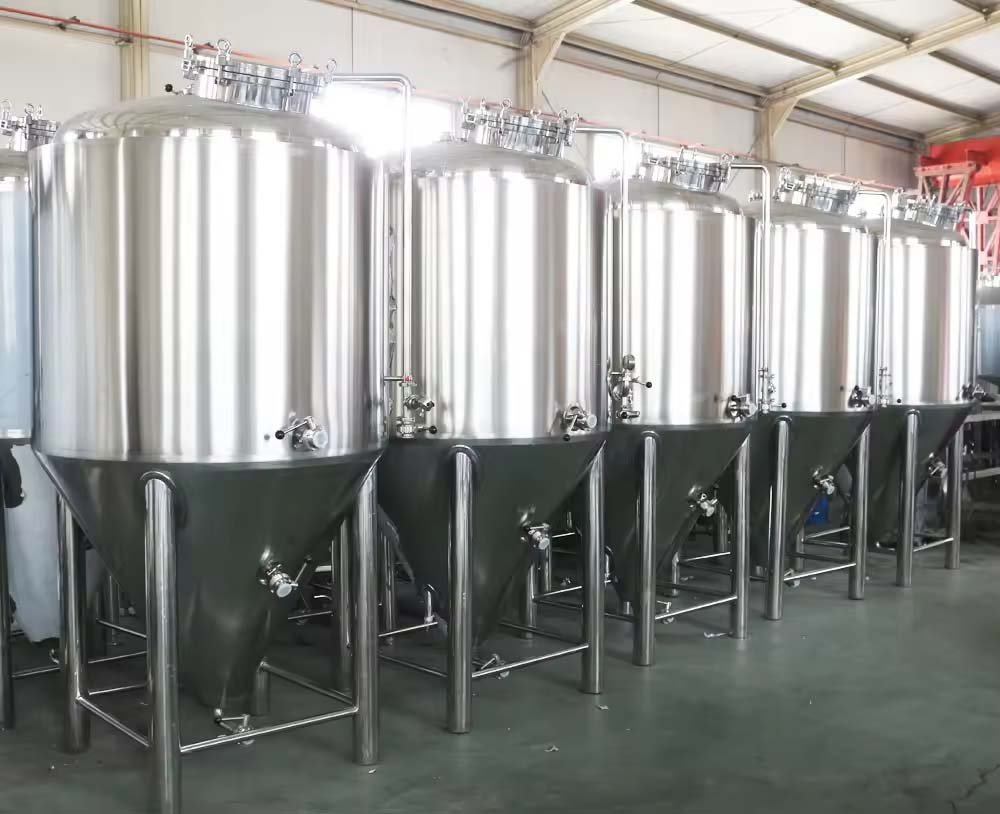
Currently, our bright beer tanks (also known as storage tanks) are widely used in the craft beer, microbrewery, and beverage industries. Specifications can be customized from small 1-2T experimental tanks to large 5T storage tanks, meeting the needs of breweries of different scales.
The tank features a cylindrical body with a conical bottom, constructed entirely from food-grade 304 stainless steel. The inner surface is mirror-polished, making it resistant to dirt buildup and easy to clean. The outer layer is wrapped with polyurethane insulation material to effectively maintain stable beer temperature. Temperature control is achieved through a coolant (typically a water-alcohol mixture) circulating in the jacket around the tank body. Cooling is generally divided into 2 or 3 sections, customized according to the tank size—this is a detail we have optimized based on years of experience to help customers more precisely control the cooling rate for different liquid volumes.
Equipment Installation and Debugging Guide
- Pre-Installation Check and Pressure Test
After the equipment is positioned and installed, first check whether the valves and pressure gauges are functioning normally. It is recommended to perform a pressure test with tap water at 0.2Mpa for 6 hours to confirm no leakage before proceeding with cleaning.
⚠️ Special Reminder: Never use hot water for cleaning! Hot water can create negative pressure inside the tank, leading to deformation. We emphasize this point repeatedly with customers before shipment, and new users are always welcome to call and confirm operational details.
- Cleaning Procedure (Before First Use or Changing Beer Types)
- Circulate and rinse with a 4% NaOH (sodium hydroxide) solution for 20 minutes.
- Rinse repeatedly with tap water until there is no slippery feeling.
- Circulate and spray with a sanitizing solution for 10 minutes, ensuring even coverage of the inner surface.
- Slowly drain the residual liquid, close the top and bottom outlet valves, and wait to fill with beer.
- Quick Reference for Valve Functions
- Top Valve (4): Vent / Cleaning Liquid Inlet
- Bottom Valve (7): Beer Inlet / Drain Port
- (8): CO2 Injection Port
- (6): Beer Outlet
- (1): Transparent Liquid Level Gauge (Must be cleaned thoroughly after each tank is emptied to prevent residue from affecting readings)
- (5): Thermometer
- (10): Coolant Inlet (Outlet is at the back of the tank)
(Our tank connections are designed according to standardized specifications, with universal fittings for easier maintenance. For any questions about connections, our after-sales team is available for remote guidance at any time.)
- Pressure Control and Safety
Check the pressure gauge (3) daily to ensure it is working correctly. The red needle indicates the upper limit, and the blue needle indicates the lower limit. When the pressure exceeds the upper limit, the pressure relief valve (11) will automatically release pressure; it will close automatically when the pressure drops to the blue needle.
The internal pressure of the tank must not exceed 0.2Mpa. Any losses caused by over-pressurization are the user’s responsibility—but as long as you operate according to the specifications, our safety valve system provides multiple protections for the equipment.
If you have any questions during use, or have special requirements regarding tank configuration or cooling section design, please feel free to contact us. Years of industry experience mean we can not only provide equipment but also offer practical advice for your brewing process.
-300x83.png)