2.png)
The rise of the beer industry and the booming demand for beer equipment have developed alongside industrial progress. The advancement of automation technology has driven this prosperity, with the most notable representation being assembly line filling technology.
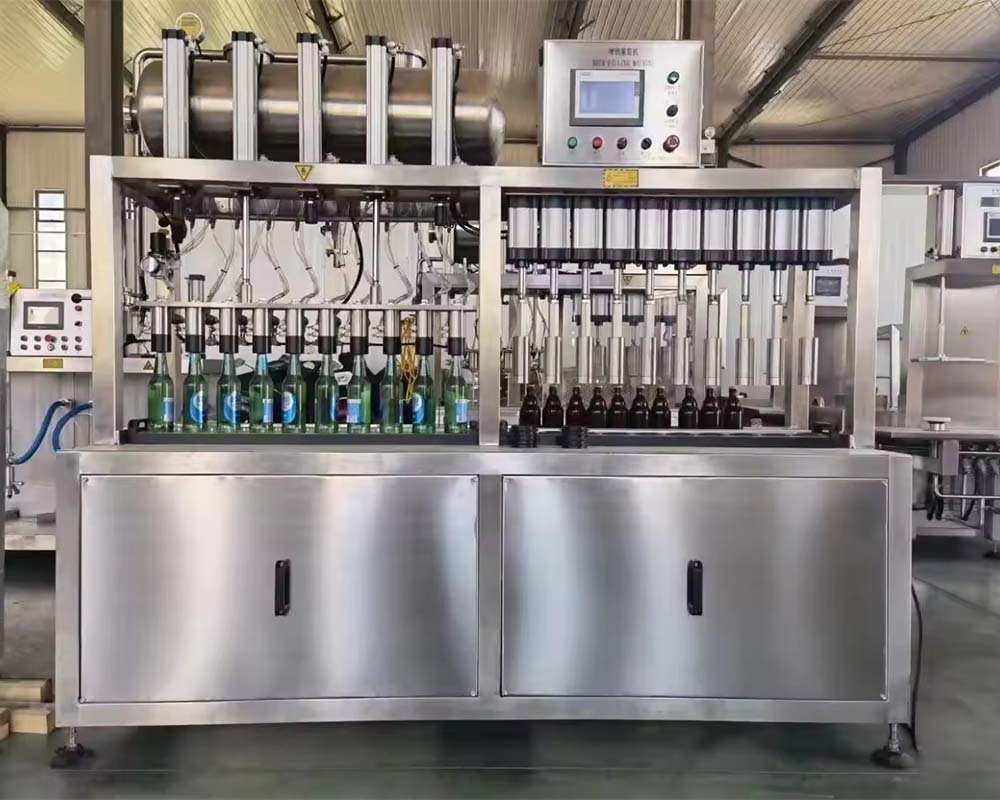
With the high-speed operation of filling machinery, the beer industry can achieve mass production. Moreover, the high precision of filling volumes effectively reduces waste in the beer production process. The use of stainless steel or non-toxic materials in parts that come into contact with the ingredients ensures the efficiency and safety of the filling machinery. This, in turn, provides us with safer beer, allowing consumers to enjoy it with confidence. Undoubtedly, the continuous innovation in filling machinery technology has given it a broader platform for development. Within the evolution of the beer industry, filling machinery remains a promising asset with an irreplaceable role.
Since draft beer is fresh beer, it retains the excellent taste and nutrition of beer. The production process requires strict aseptic conditions, significant equipment investment, and filtration through membrane or pore filters before filling to eliminate all microorganisms. The beer barrels and production environment must also be strictly sterile. The sales method is unique, requiring a fresh beer dispenser to cool the beer and add carbon dioxide. Carbon dioxide is also used to push the beer out, preventing oxidation caused by contact with air. However, due to the short shelf life of fresh draft beer, distributors bear certain risks. If it is not sold in time, it can result in significant financial losses. Another commercial factor is that draft beer is a new type of product. To maintain its value and ensure its long-term market presence, it has been positioned as a premium product since its introduction.
Craft beer produced with beer equipment is different. It comes in two types: pasteurized and unpasteurized. Unpasteurized beer has a shelf life of no more than one month and requires specific storage temperatures.
If pasteurized and processed with filling technology, it can be bottled for long-term preservation, with a shelf life of at least one year. Additionally, the brewing process does not involve blending. This is why draft beer may taste milder, while craft beer has a particularly rich malty aroma.
-300x83.png)