2.png)
Hi everyone, I’m Emma, and I run a small family-style restaurant in the suburbs of Sydney. Three years ago, like many others in the hospitality industry, I found myself asking the same question every day: how do I get customers to stay a little longer?
The pub down near Bondi Beach had live bands on weekends. The Italian place in the next suburb ran half-price pasta nights. Me? My food was good, my regulars were loyal—but honestly, there was nothing that made people drive past the others to come to me.
Then one day, a regular customer said something that hit me like a lightning bolt. “Emma,” he said, “if you had your own fresh beer on tap, I might not bother going all the way to Circular Quay on weekends.”
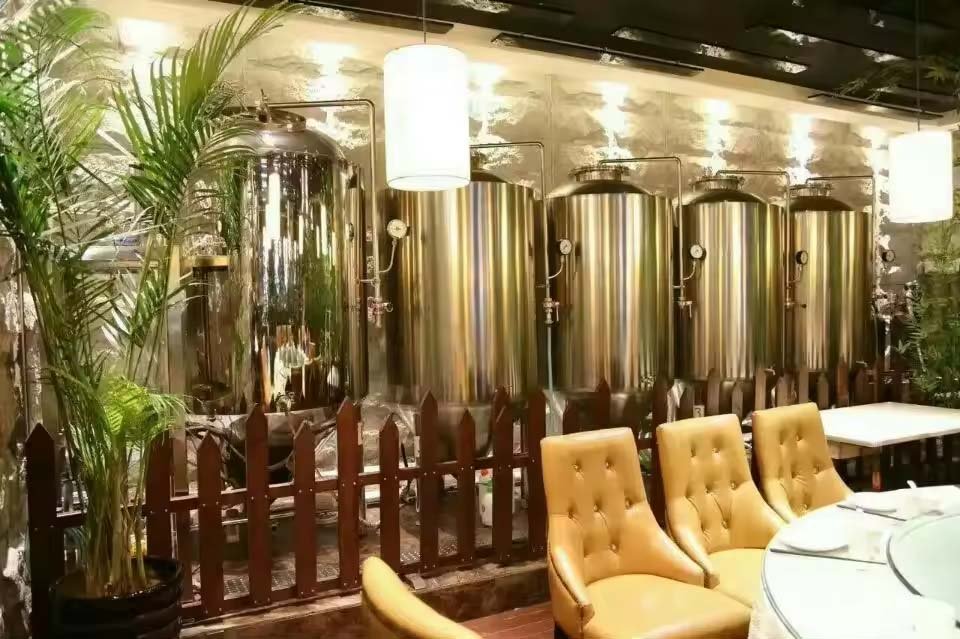
From that moment on, I started seriously asking: does brewing my own beer actually make sense for a restaurant?
To be honest, I hesitated at first. Bottled beer is easy to stock, but the margins are razor-thin. Brewing my own? It sounded like a headache—expensive equipment, complicated operations, and what if I ruined a batch?
But I’ve always been someone who likes to run the numbers. So I sat down and did the math: if I could sell just a few dozen extra liters of fresh beer each day, the profit per liter would be several times higher than bottled. More importantly, it would be something unique—something my competitors didn’t have. Wasn’t that exactly the kind of edge I’d been looking for?
Choosing the Equipment: I Was Overwhelmed by “Two-Vessel” and “Three-Vessel” — Until I Found the Right People
Once I’d made up my mind, the next step was choosing the equipment. As a complete outsider to the brewing world, I was lost. Homebrew systems: 20L, 30L, sometimes 60L. Commercial systems: starting at 100L and up. And then there were used systems—prices that made my heart skip—but something held me back.
A friend who runs a bar warned me: “Used equipment is like a used car. It might look fine on the surface, but when something breaks, good luck finding someone to fix it.”
That warning killed any temptation I had to go cheap. I started searching for a reliable supplier and eventually found Zorime—a company based in Jinan, China. Later I learned that Jinan is the birthplace of China’s craft brewing equipment industry.
My First Impression: They Weren’t Trying to Sell Me Something — They Were Trying to Solve My Problem
During our first video call, I expected them to start quoting prices like every other salesperson. Instead, they asked me questions.
“Emma, how big is your restaurant? How many customers per day? What kind of food do you serve?”
I told them about my place, and they walked me through my options. “Those 20L or 30L homebrew systems are great for hobbyists. For your restaurant, you need at least 100L to start. But bigger isn’t always better—it has to match your customer volume, or you’ll end up with idle capacity.”
They also warned me: “If you come across a cheap used system, make sure you ask about after-sales support. If it breaks and you can’t find anyone to fix it, you’re looking at lost business and ruined batches.”
Right then, I knew I could trust these people.
What Really Gave Me Confidence: Their Backing
Later I learned that Zorime isn’t some small workshop. They’re backed by the Shandong Academy of Sciences, with brewing technology that’s among the best in China. And because they’re based in Jinan—surrounded by a mature supply chain—it means if I ever need a replacement part, they can ship it the same day. No waiting weeks, no downtime.
When my equipment arrived in Sydney, their engineers guided me through installation remotely, step by step. One time, at 2 AM, I ran into an operational issue. I messaged them on a whim, not expecting a reply until morning. They responded instantly and walked me through a fix via video call.
That’s what I call “worry-free after-sales support.” It’s not just something written in a contract—it’s something I experience every single day.
The Results: The Numbers Speak for Themselves
Now, my restaurant sells around 2,500 liters of fresh beer every month.
- Equipment investment: approximately AUD $35,000
- Gross profit per liter: around AUD $15 (varies by style)
- Monthly gross profit: approximately AUD $37,000
- After ingredients, labor, utilities—net profit: consistently over AUD $18,000 per month
That means my equipment paid for itself in under two months.
Even better? My regulars now say, “Emma, your IPA is better than half the craft bars out there.” New customers come specifically because they’ve heard “that place brews its own.” Differentiation—achieved.
A Few Words for Fellow Restaurant Owners
If you’re thinking about adding a small brewing system to your place, here’s my advice:
First, don’t just stare at the price tag. That cheap used system might be the most expensive mistake you ever make.
Second, don’t be afraid to ask the details. How thick is the steel? What about the welding? What kind of after-sales support do you offer?
Third, choosing the right people matters more than choosing the right equipment. I chose Zorime not just because their equipment is good, but because their people are reliable—down-to-earth, honest, and genuinely committed to helping you brew great beer.
Value for money isn’t about cutting corners. It’s about leveraging a mature supply chain and world-class technology to pass real savings on to the customer.
If you want to talk about how fresh beer could make your restaurant stand out, reach out to my Chinese friends. I know they’ll listen to your needs just as carefully as they listened to mine.
-300x83.png)